
Book Appointment Now

The Problem With AI-Generated Product Photography — And Why C2PA Changes Everything
AI-generated product photography has crossed a threshold. Leading generation models now produce output that looks indistinguishable from traditional studio work in most commercial applications — at a fraction of the cost and timeline.
Brands are moving fast. And that speed is exactly where the problem starts.
The accessibility of AI-generated product photography has created a second-order problem. Most brands have not yet confronted it: a visual asset library built entirely on synthetic imagery with no verifiable origin, no documented authorship, and no provenance trail. Meanwhile, platforms, regulators, and legal counterparties increasingly require all three.
Three Problems With Unverified AI Product Imagery
1. Platform Policy Risk for AI-Generated Product Photos
Meta, Google, and Amazon are actively developing and enforcing content authenticity policies for AI-generated imagery in commercial contexts. Platforms increasingly restrict, flag, or remove assets without verifiable provenance — regardless of visual quality.
Brands that built product visual libraries on unverified AI imagery now face real operational disruption. Not at some point in the future. Enforcement intensifies every quarter.
The practical consequence is significant: you may have thousands of production-ready AI product photos that fail a platform policy check they did not need to pass six months ago.
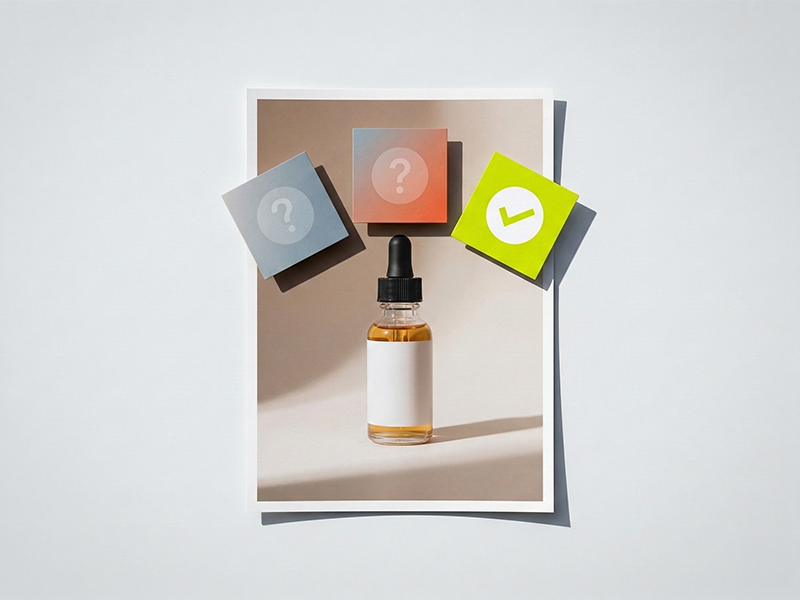
2. Regulatory Exposure: EU AI Act and US State Frameworks
The EU AI Act includes disclosure requirements for AI-generated content in commercial contexts. US state-level regulatory frameworks — in California, Texas, and others — are advancing similar requirements at different rates. Furthermore, operating a product visual library on undisclosed, unverified synthetic imagery creates compliance exposure that compounds over time.
For brands selling across jurisdictions, this is not a future consideration. The disclosure obligation for AI-generated product photography in EU-facing commercial contexts is already in effect.
3. No Defense in a Dispute
When someone contests a visual asset — for copyright, authenticity, or accuracy in product representation — the brand that produced it needs to demonstrate origin, authorship, and creation method. Unverified AI product imagery provides none of this.
This matters in two scenarios most legal teams underestimate. First, competitor IP disputes over visual similarity. Second, consumer protection complaints about AI-generated imagery that does not reflect the actual product. In both cases, a brand that cannot document its creative process has no foundation to stand on.
Why Art Direction Still Matters in AI Product Photography
The widespread availability of AI image generation tools has created a visible misconception: that quality AI product photography is a prompt engineering problem.
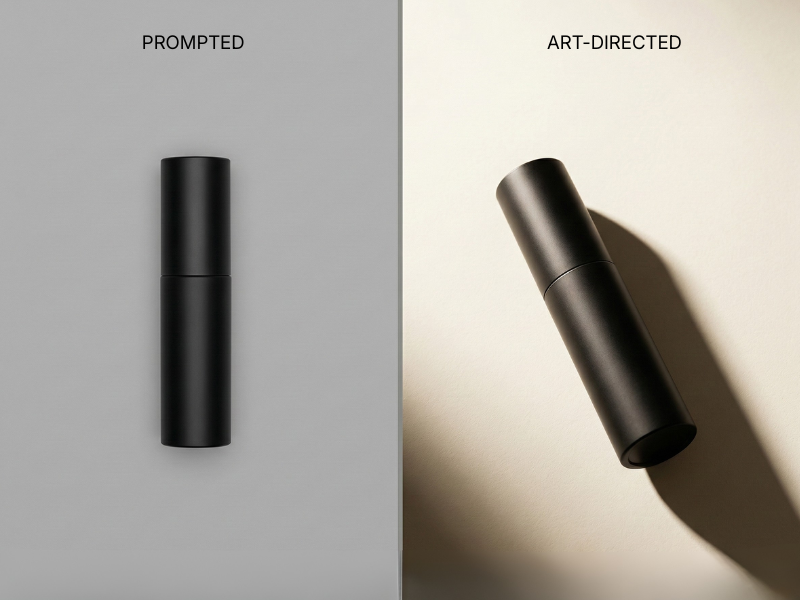
It is not. Moreover, the gap between AI imagery produced with genuine art direction and imagery produced with a good prompt is legible — to trained eyes immediately, and to commercial performance metrics shortly after.
Art-directed AI product photography for brands requires decisions that prompts alone cannot make:
Brand Visual Language — Every production choice (lighting direction, color temperature, compositional structure, subject treatment) must anchor to the brand’s established visual system. AI output that looks good in isolation often sits discordantly against existing brand assets. Art direction prevents this at the production stage, not the revision stage.
Commercial Intent — Product imagery for e-commerce conversion, paid social advertising, and editorial placement has meaningfully different compositional requirements. Therefore, art direction ensures each asset suits its deployment context — rather than being produced generically and retrofitted later.
Consistency at Scale — A brand visual library built on art-directed AI product photography maintains coherent style, tone, and compositional logic across every asset. Consequently, that consistency is what separates a visual system from a random collection of individual images.
How C2PA Credentials Solve the AI Product Photography Problem
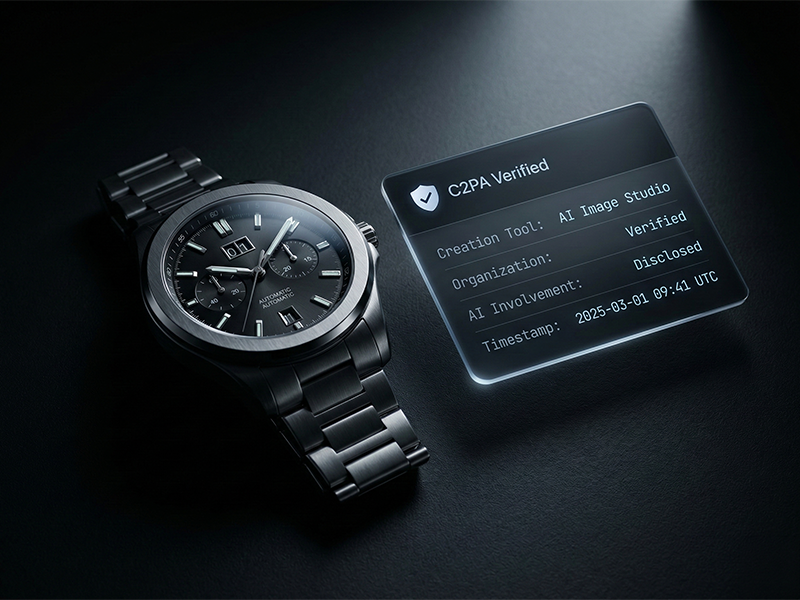
C2PA content credentials, embedded into AI-generated product imagery at the point of creation, address all three problems above simultaneously.
For Platform Policy Risk A C2PA-credentialed AI product photo carries a verifiable record of its origin and creation method, including disclosure of AI involvement. As platform content authenticity enforcement advances, credentialed assets stay ahead of the compliance curve. This is the difference between proactive verification and reactive remediation.
For Regulatory Exposure C2PA credentials provide the documentation that EU AI Act disclosure requirements and emerging US frameworks demand. Importantly, the record embeds in the asset itself — rather than depending on external record-keeping that teams can lose, dispute, or simply never maintain.
For Dispute Defense A credentialed asset carries a cryptographically secured, tamper-evident provenance record. Anyone can verify this record using publicly available tools — without accessing internal systems, creative briefs, or production documentation that may not exist when you need it.
What Verified AI Product Photography Looks Like in Practice
At Virtanica’s AI Image Studio, every production engagement follows a structured sequence that delivers both visual quality and provenance integrity.
Brief & Art Direction Every engagement starts with a detailed brief — brand guidelines, campaign objectives, platform specifications, and visual references. The team makes all production decisions with strategic intent before generating any asset.
Production & Refinement Specialists generate, review, and refine assets against the brand’s established visual standards. They validate output quality and brand alignment at each stage before finalization.
C2PA Credentialing & Delivery Virtanica embeds C2PA content credentials into every final asset before delivery. Clients receive production-ready AI product photography with verified provenance documentation — ready for immediate platform deployment without triggering policy flags or creating compliance gaps.
The Real Cost of Waiting
AI-generated product photography is not going away. The quality, efficiency, and cost advantages are too significant for brands to ignore. However, the era of unverified synthetic imagery — produced without provenance documentation, deployed without disclosure, and used without any defense against platform or regulatory scrutiny — is closing.
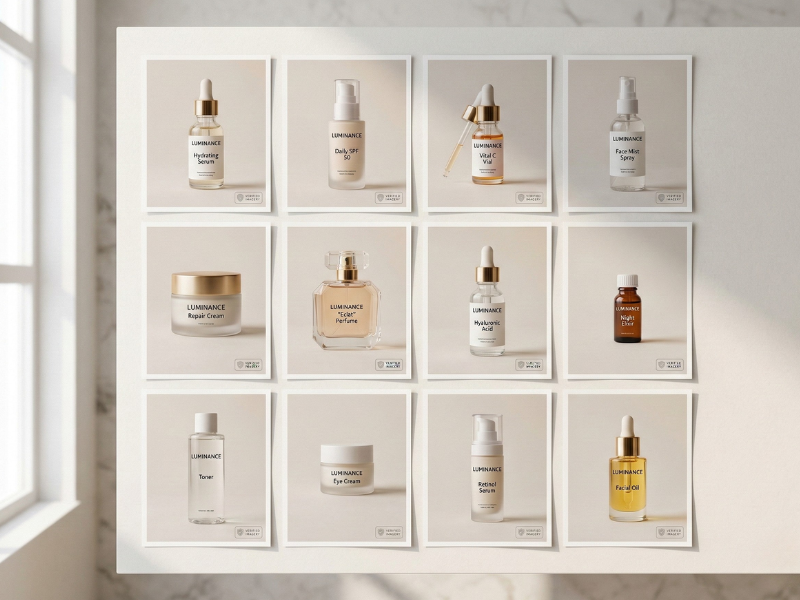
Brands that build their visual asset libraries on art-directed, C2PA-credentialed AI product photography now will not need to retrofit their entire visual infrastructure later. When platform enforcement and regulatory requirements make verification non-negotiable, they will already be ready.
Virtanica’s AI Image Studio produces art-directed, C2PA-credentialed product photography for international brands across US, UK, and European markets. See how it works →